Over the past several months, I have been focusing on the ÁLEṈENEȻ Environmental Scan, a project guided by community perspectives and aimed at strengthening W̱SÁNEĆ and regional Indigenous sovereignty-based and led education. This project highlights what is already strong and active, while also identifying areas where additional resources or support are needed. Its goal is to strengthen educational sovereignty by ensuring that teachings, programs, and materials remain grounded in W̱SÁNEĆ and Coast Salish laws, language, and relationships with the land and waters. More than an inventory, this scan is meant to serve as a living and evolving resource; one that gathers materials in accessible places, supports educators and students, and reflects community priorities. By bringing visibility to the knowledge that already exists, this work helps ensure that important resources are not overlooked, but are actively used in classrooms, programs, and community spaces. Beginning in early 2026 we will be sharing our work on-line and in community.

At its heart, the ÁLEṈENEȻ Environmental Scan is about carrying forward our responsibilities to land, language, and community. It is a starting point that will continue to grow through collaboration with staff, Elders, and community members, supporting the ongoing resurgence of W̱SÁNEĆ education for future generations, and I am so grateful to be a part of this work.

H͸SW̱ḴE HÁLE”

By: Desiree Jones, UVic Graduate student and WSÁNEĆ community member from Pauquachin First Nation
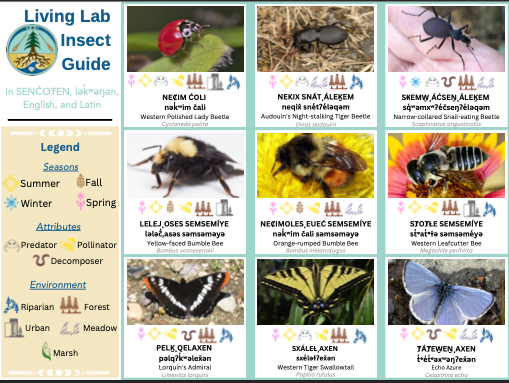
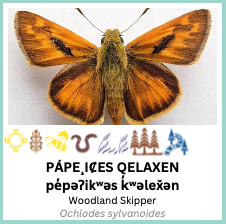
Discover our relatives through the Living Lab Insect Guide, which highlights insect species found across the traditional territories of the Coast Salish Peoples. Learn their names in W̱SÁNEĆ (SENĆOŦEN), Songhees–Esquimalt (lək̓ʷəŋən), English, and Latin. The guide features contributions from knowledge holders SELILIYE (Belinda Claxton), J,SIṈTEN (John Elliott Sr.), ȻOSINIYE (Linda Elliott), SX̱EDŦELISIYE (Renee Sampson), TE,TES,ȾE (Lyndsey Henry), and Tye Swallow. Graphics and layout by Jessica Joseph and Kyle Clarke.

The full guide can be downloaded here: https://livinglabproject.ca/insectguide/
ReconciliACTION in Oak Bay
For the ReconciliACTION Oak Bay Network, September was focused on preparations to honour the National Day for Truth and Reconciliation and in building and extending relationships to support the work.
The Network collaborated with Oak Bay High School on the first school-wide ceremony to mark the day, attended by 1500 students and staff, and connected with a student leader who will join our steering committee as we begin to develop more joint initiatives with the Oak Bay High community. These include planning appropriate ways to use next November’s tenth anniversary of the raising of the Sno’uyutth (“Spreading Good Energy” in Lekwungen) Welcome Pole in front of the high school to assess how far Truth and Reconciliation has been advanced in Oak Bay in the past 10 years and identify ways to accelerate and deepen the commitment in our community over the next 10.
ReconciliACTION representatives have picked up where they left off last spring and have been speaking at the high school ceremony and to classes this fall about the work underway in our community and how students can get involved.
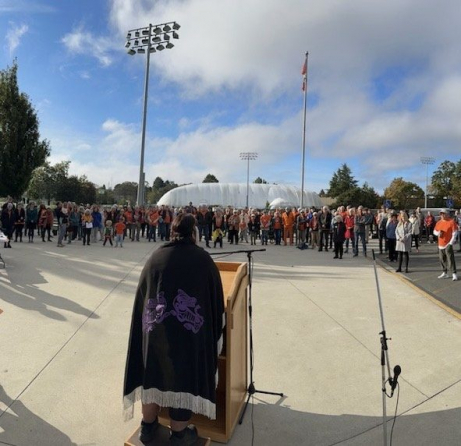
For the fourth year, the ReconciliACTION Oak Bay Network hosted a community ceremony on Sept. 30 at the Sno’uyutth Pole. It was attended by 200 residents, including all six Oak Bay Councillors and the Minister of Indigenous Relations and Reconciliation Murray Rankin. Personal pledges for Truth and Reconciliation were distributed to attendees: https://reconciliactionoakbay.ca/
ROBN also participated in the Victoria Foundation workshop on “Collaborative Leadership for Impact,” reached out to Oak Bay business leaders, and began a conversation with Oak Bay about the potential of creating a shared Council-Community Action Plan on Reconciliation in Oak Bay.
ReconciliACTION in Oak Bay


Photos: (Left) Songhees knowledge keeper Florence Dick at the Sept. 30 community ceremony at Oak Bay High School
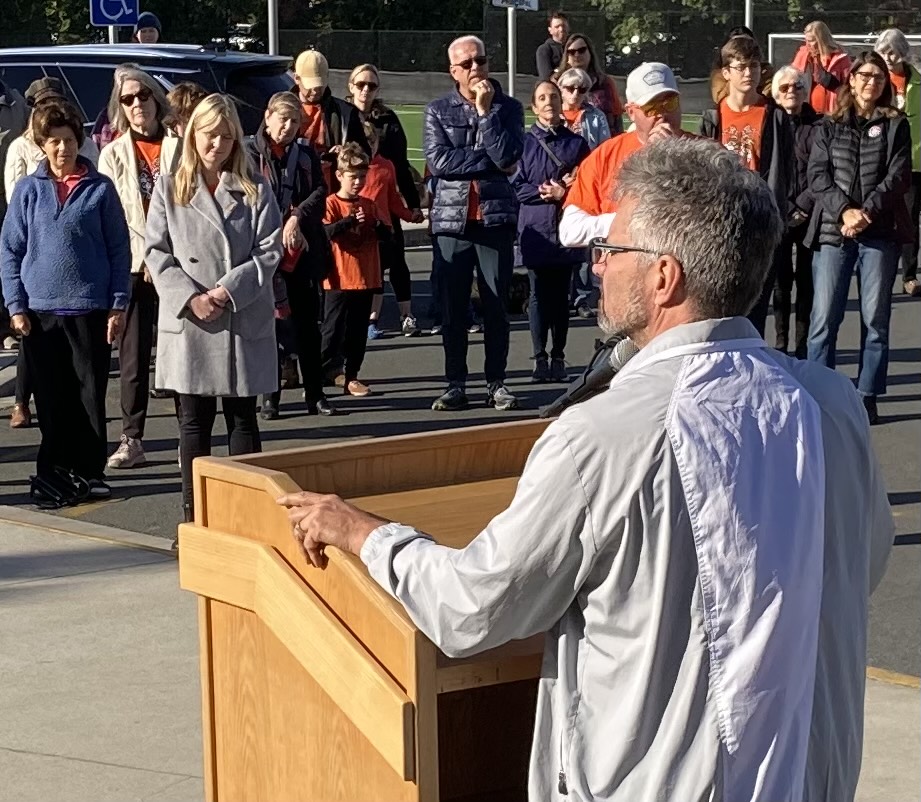
(Right) Oak Bay High School teacher Steven Price at the Sept. 30 community ceremony at Oak Bay High School

Register NOW for Tapestry’s Changemakers in Action: Climate Across the Curriculum conference at Belmont Secondary on Friday, February 16, 2024. 

This conference is for K-12 Teachers and Community Educators. It will be held from 8:30 to 3 PM on Friday,, February 16

Living Lab staff and network partners are excited to be presenting two workshops at this exciting event:  

  1. Land-Based Learning
  2. Decolonizing Curriculum

Registration info is located here:

https://tapestryconference.ca/climate-action/custom-climate-action-overview

This event is proudly hosted by SSEEPSA – the Salish Sea Environmental Educator Professional Specialists Association. 

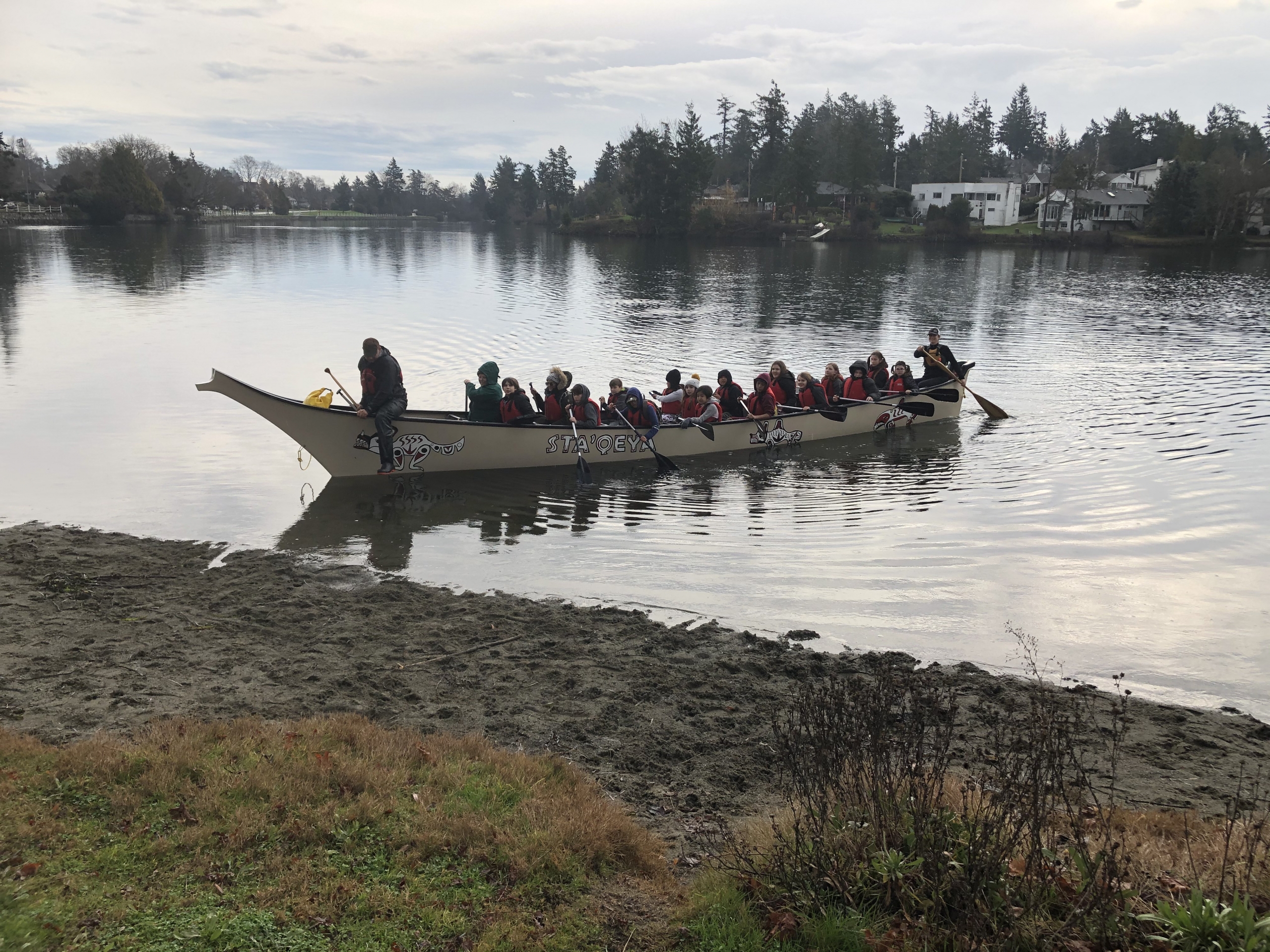
Living Lab provides enrichment to the Big Canoe Program, a place-based learning program at Shoreline middle school. The program allows middle school youth (grades 6-8) to learn about the importance of the Gorge waterway on traditional Lekwungen territories.


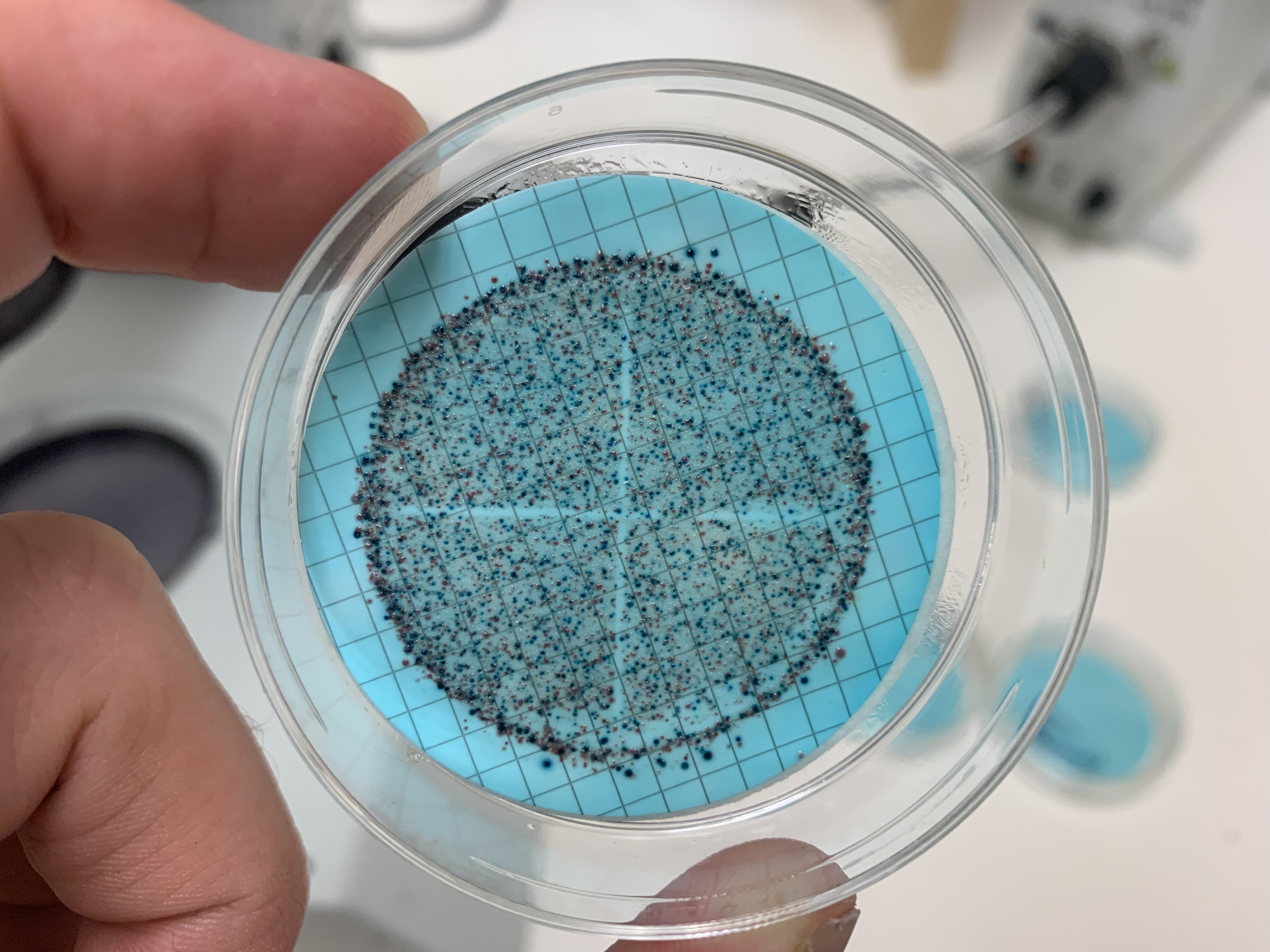
During River’s Day (Sept. 22, 2019) Talen, with help from some Oak Bay High students and Biology Teacher, Mr. Derek Shrubsol, collected some water from Bowker Creek. At UVic, the water was filtered and then the filter paper placed on media that not only helps bacteria grow, but is treated in a way that helps in the identification of the bacteria (some are blue, some red). This success (see image) is the first step in the development of a program that will eventually allow  students to monitor water (streams, lakes, bays) that matter to them. Thanks very much to Dr. Asit Mazumder at UVic for providing the reagents and equipment necessary for this water testing.

The University of Victoria – Biology Lab with Matt Miller and John Taylor.

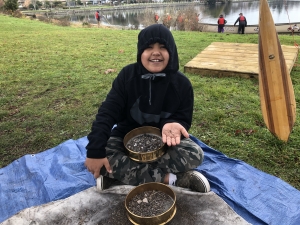
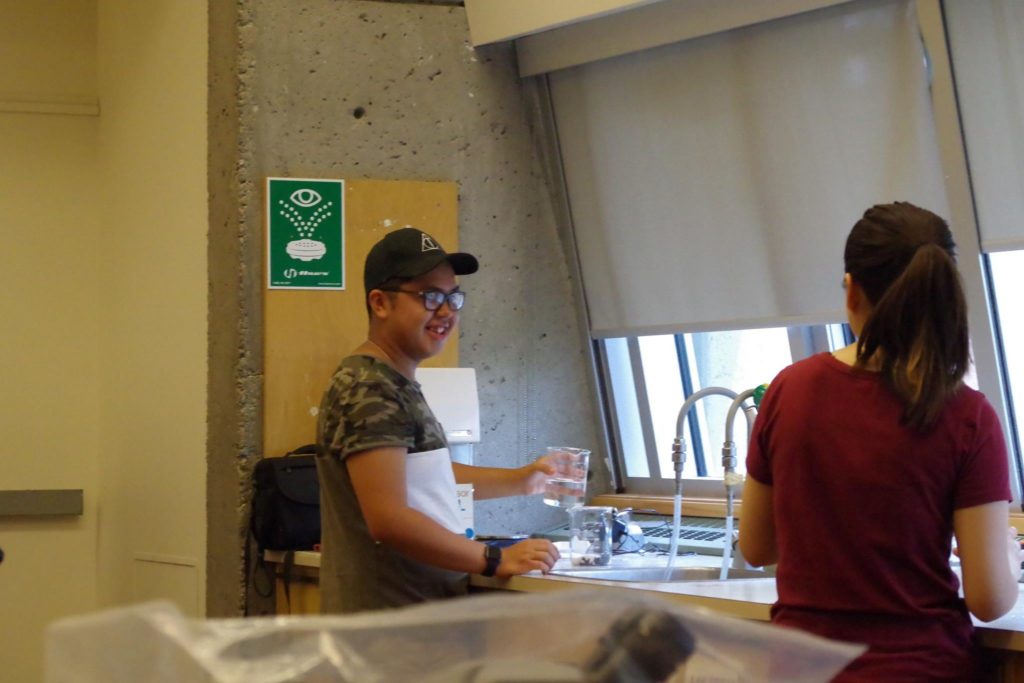
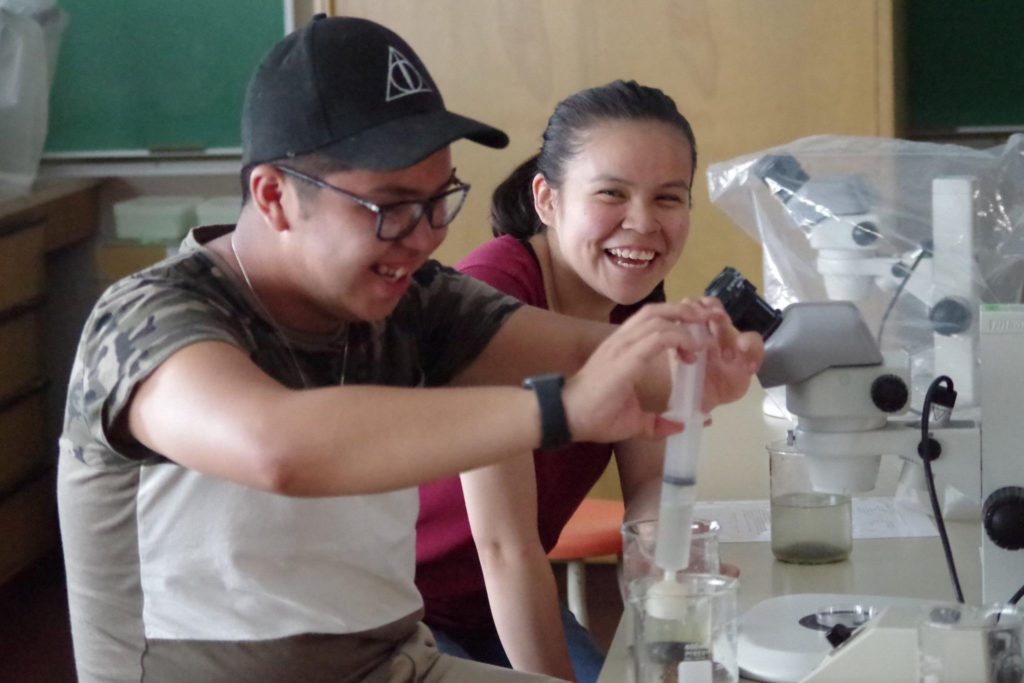
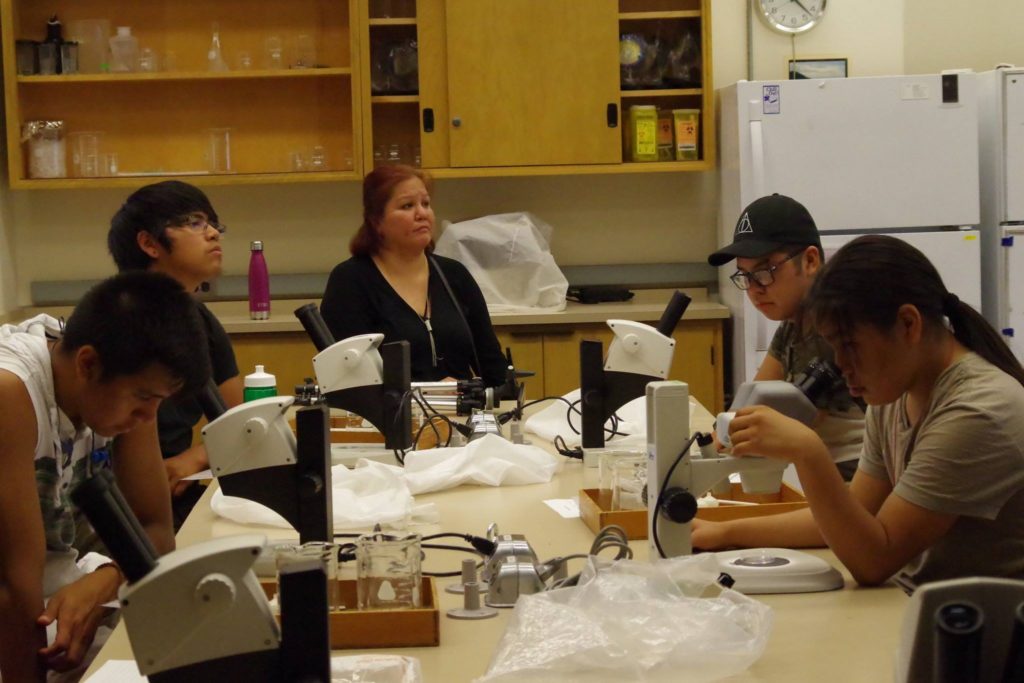
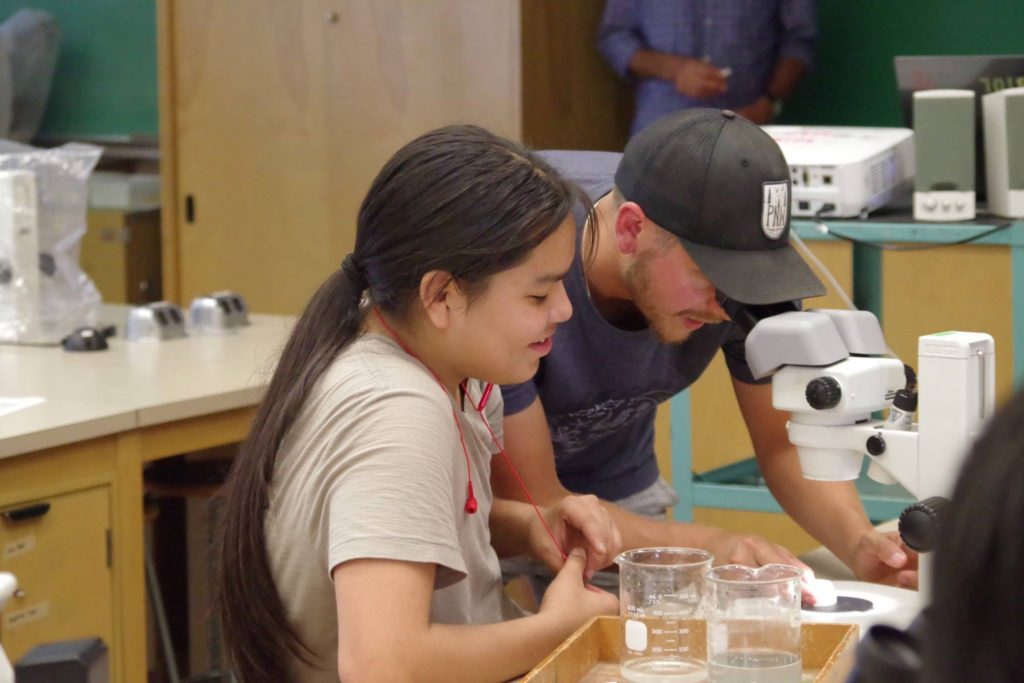
After we collected sand and water samples from Cadboro Bay, we brought them to the University of Victoria’s biology lab to be analyzed.  We had a special guest drop by to share some zooplankton for our youth to study.


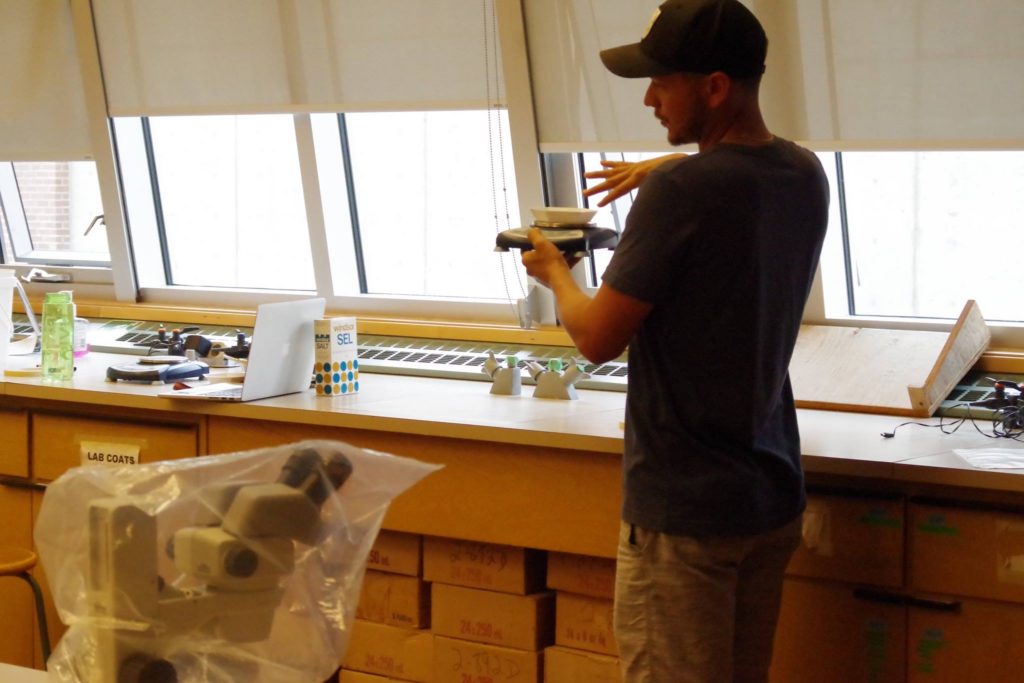
Matt Miller showing our youth some of the equipment they’ll be using.  He walked them through the entire process of preparing the saline solution, micro-filtering the samples, preparing the slides and setting up the micro-scope.


Eugene Sam and Cynthia Sam preparing their saline solution to separate the components in the samples.


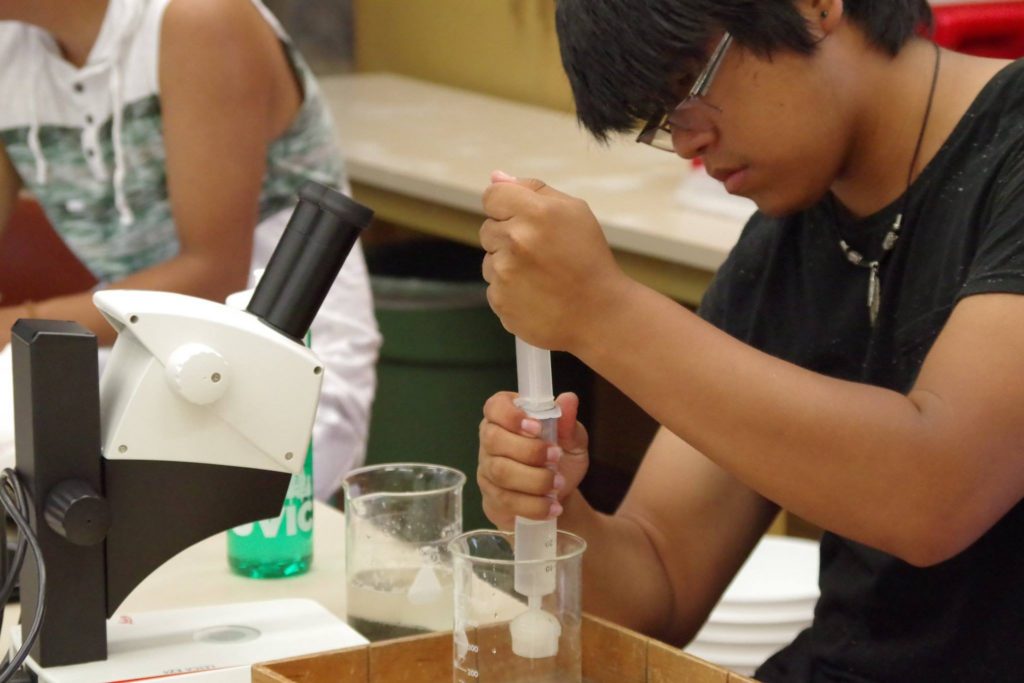
Eugene filtering the water sample to see if there are micro-plastics present in the sample.


Rylan Pelkey preparing his sample for testing the presence of micro-plastics.

He is filtering his saline solution to isolate his sample so he can view it under the compound microscope.


Linda-Jane Fisher isolating her sample for lab work.


It was great to have one of our Songhees parents watch what our youth group do with our Living Science Lab work.  Lily-belle Louie joined us for a part of the day.  Her son Logan was the youngest member joining us for this 2-day UVic-SAYL Science Camp.


Matt Miller and Logan Louie doing lab work. Logan joined us for the 2-day science camp.  It was amazing seeing him fully engage with all our teachers.


Angelina Sam at UVIC’s biology lab.


Cynthia Sam in UVIC’s biology lab.


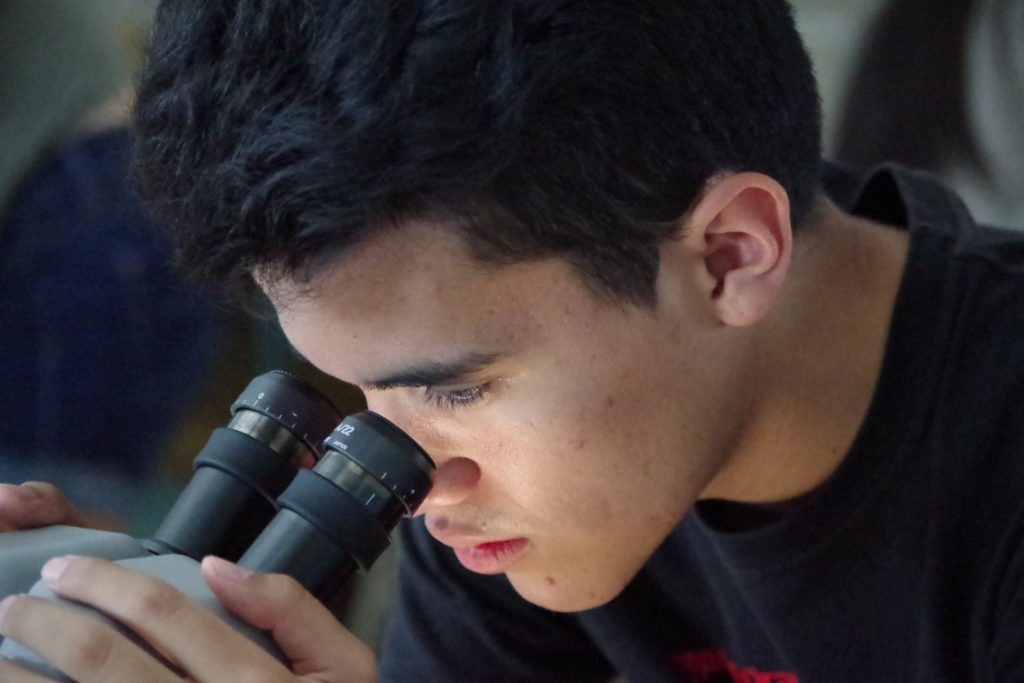
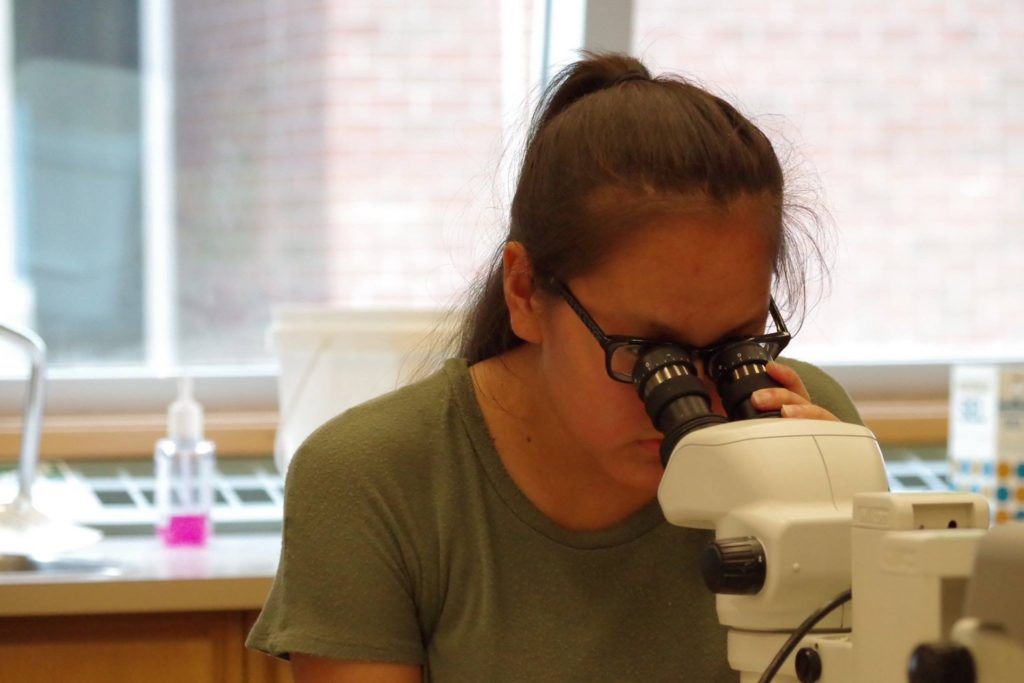
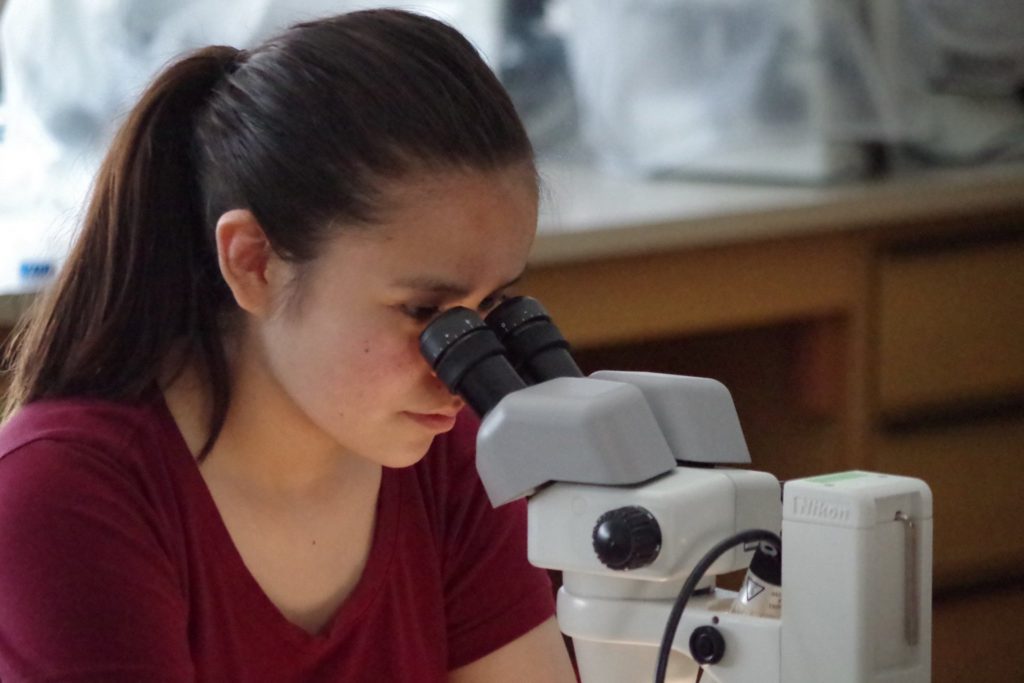
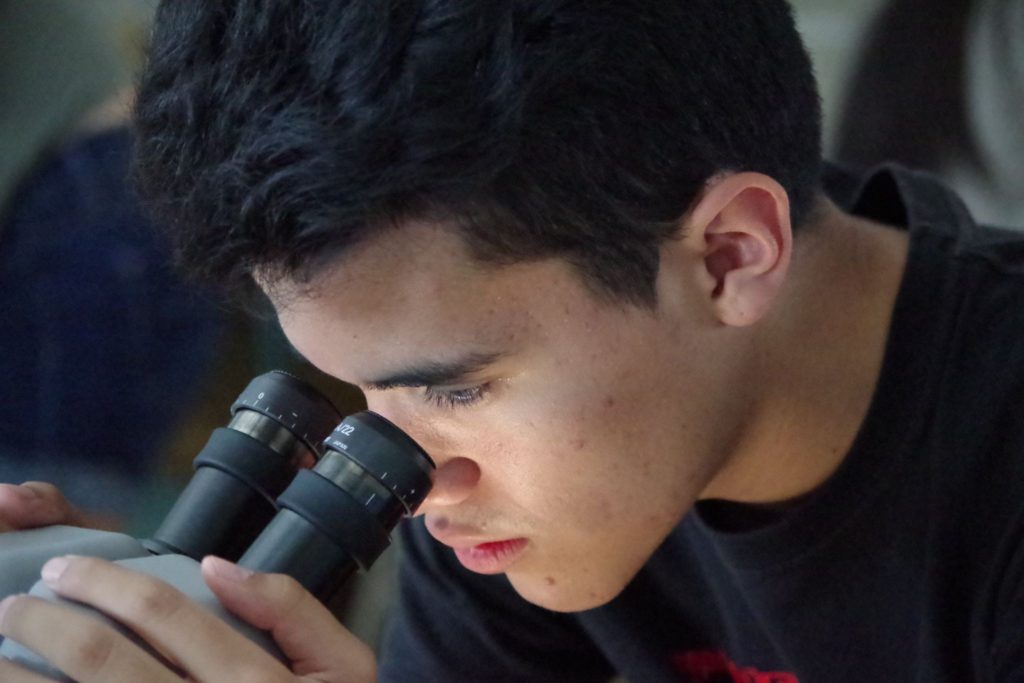
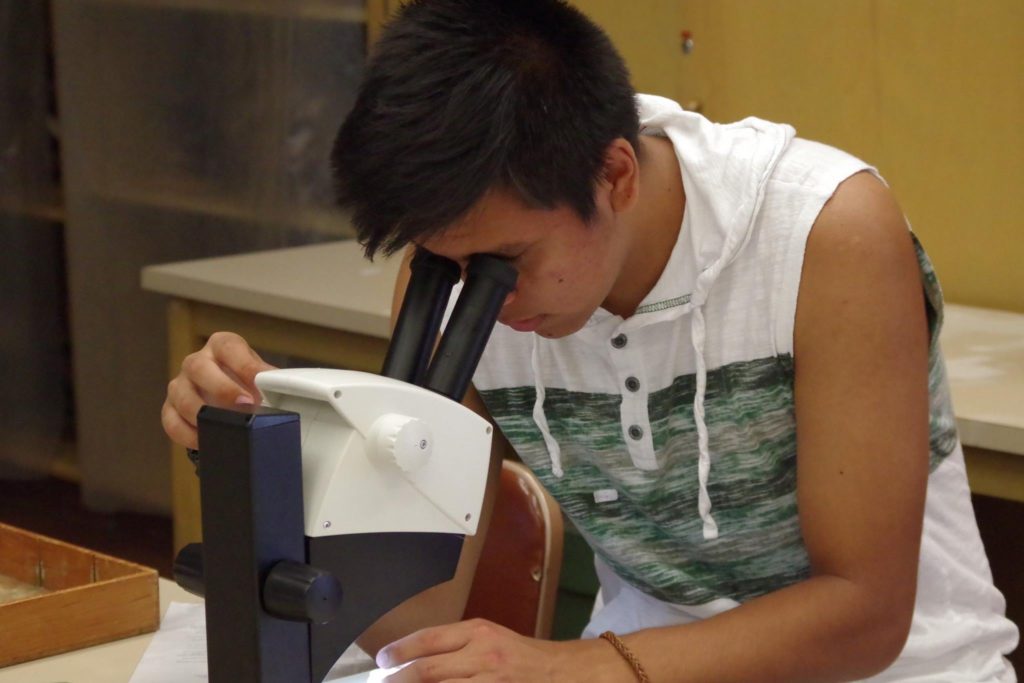
Rayn Cook-Thomas viewing samples under a compound microscope.


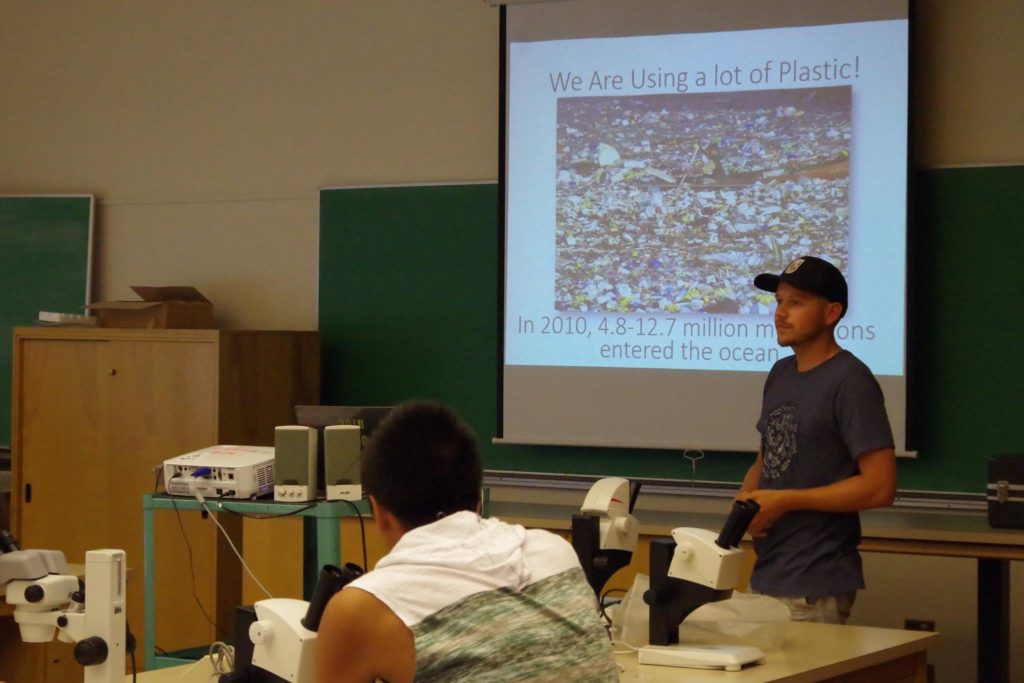
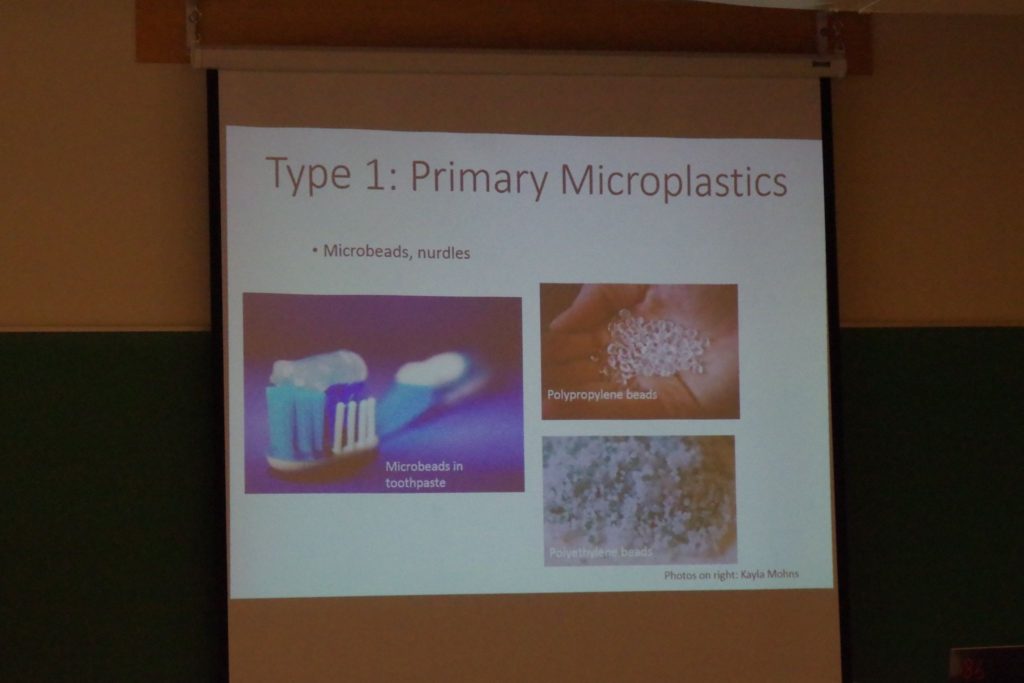
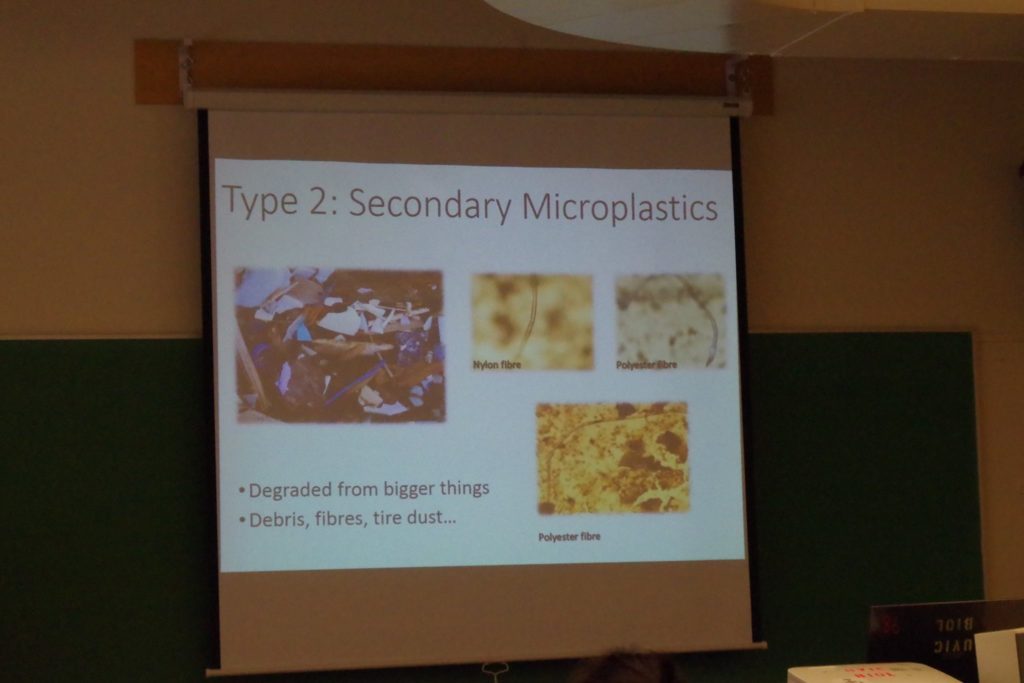
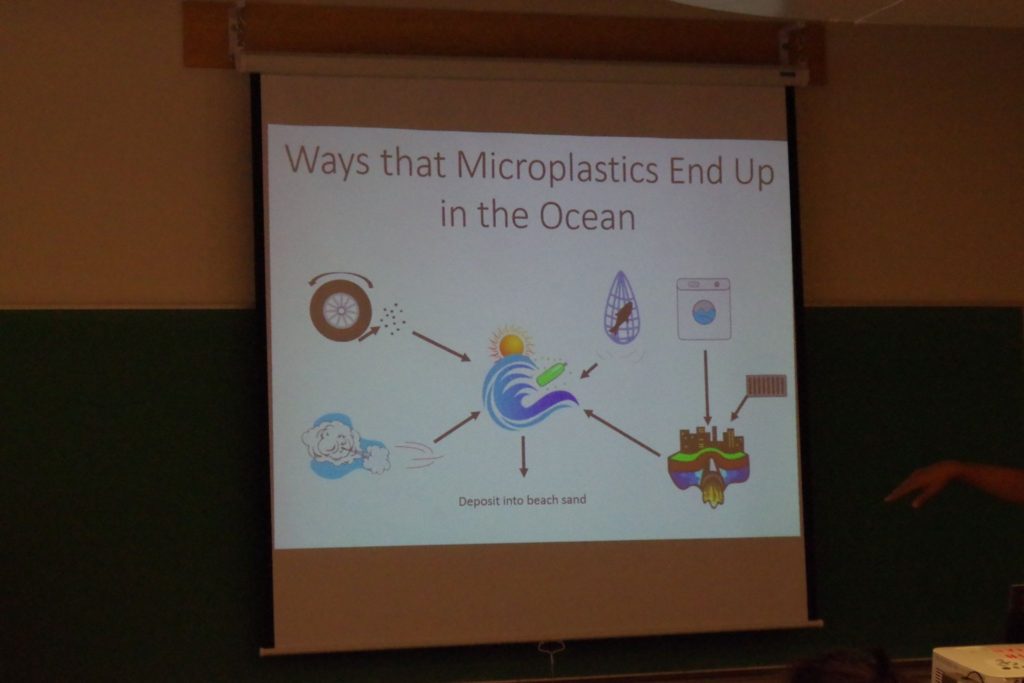
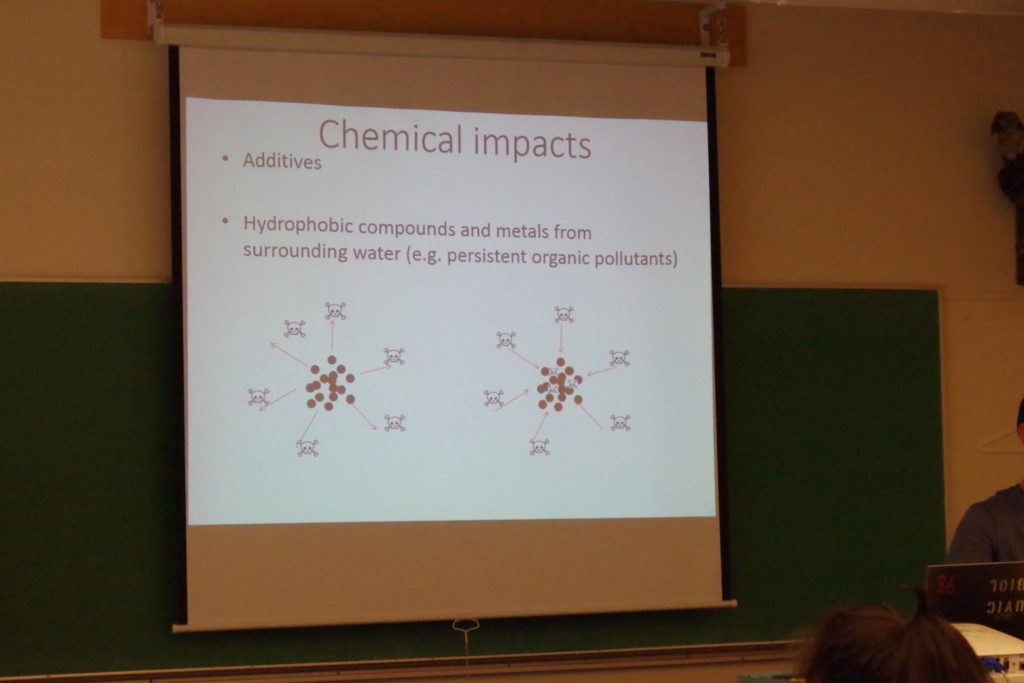
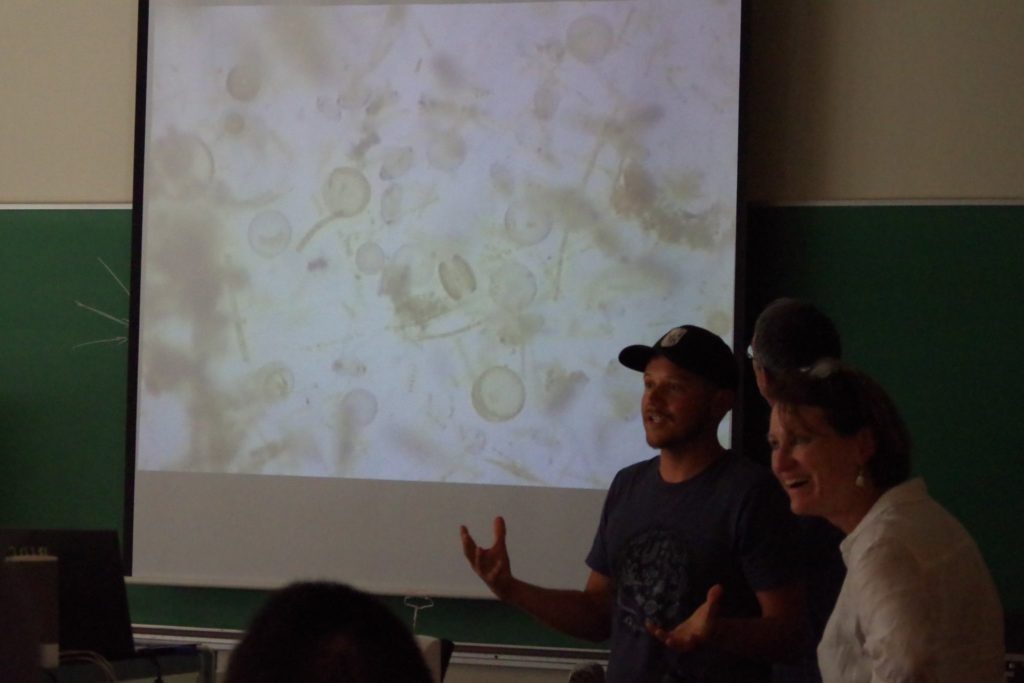
Matt Miller’s presentation on microplastics.


Type 2: Secondary Microplastics


Way that microplastics end up in the ocean


Chemical impacts of microplastics


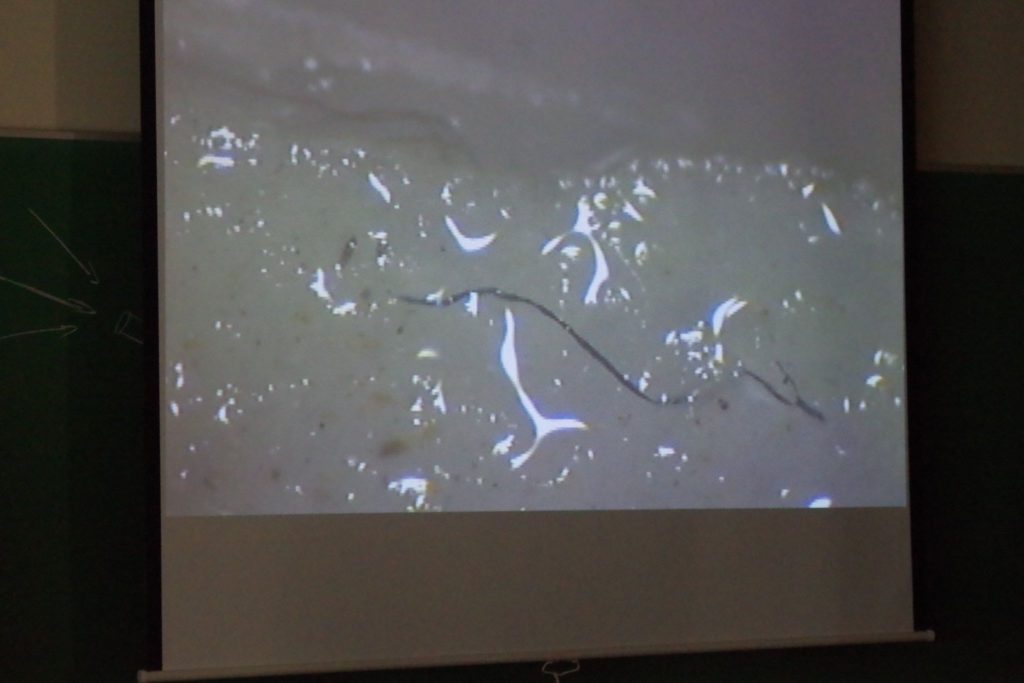
Sample of one of the microplastics found in our water or sand sample from Cadboro Bay.


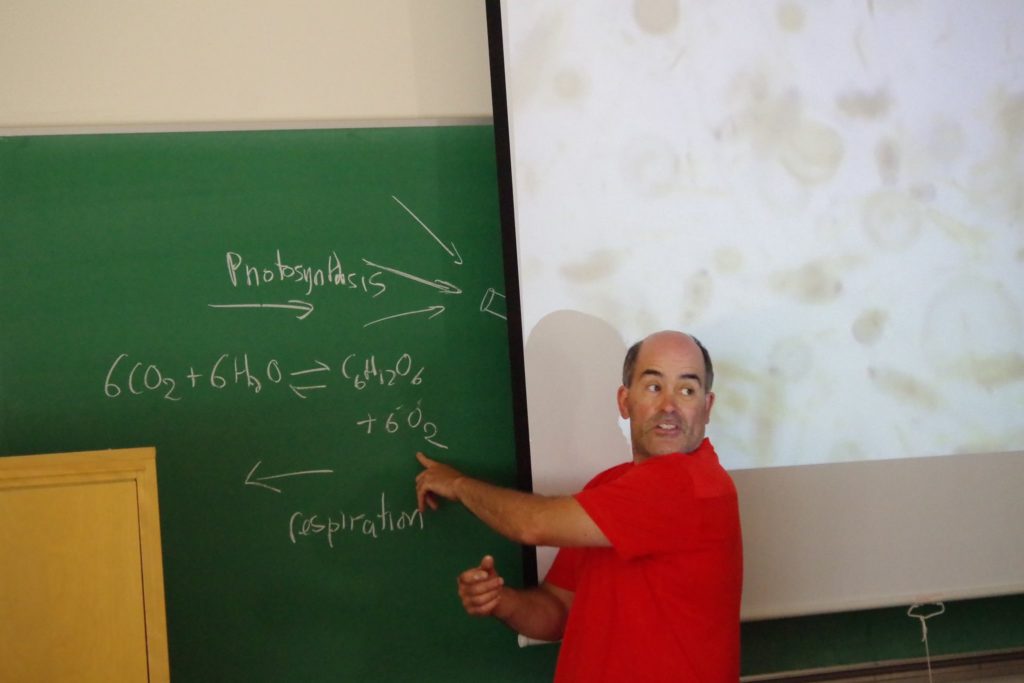
Visiting biology professor Dr. Inigo Novales-Flamarique from Simon Fraser teaching our youth about photosynthesis


Phoenix Clark looking at some zooplankton under the microscope.


Matt Miller and Maeve Lydon introducing the youth to zooplankton.


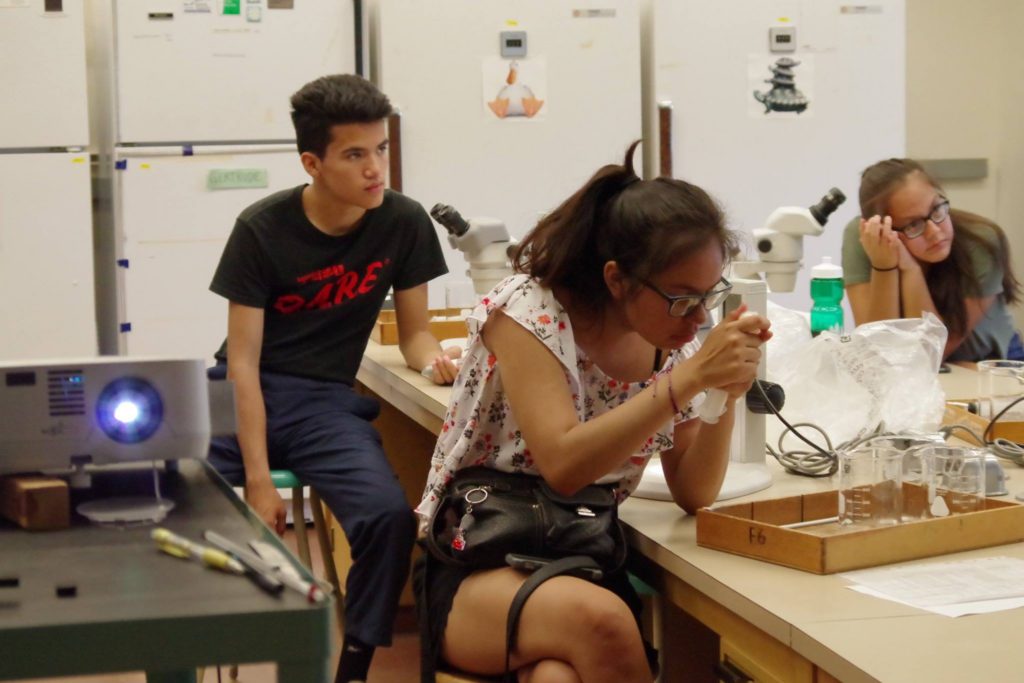
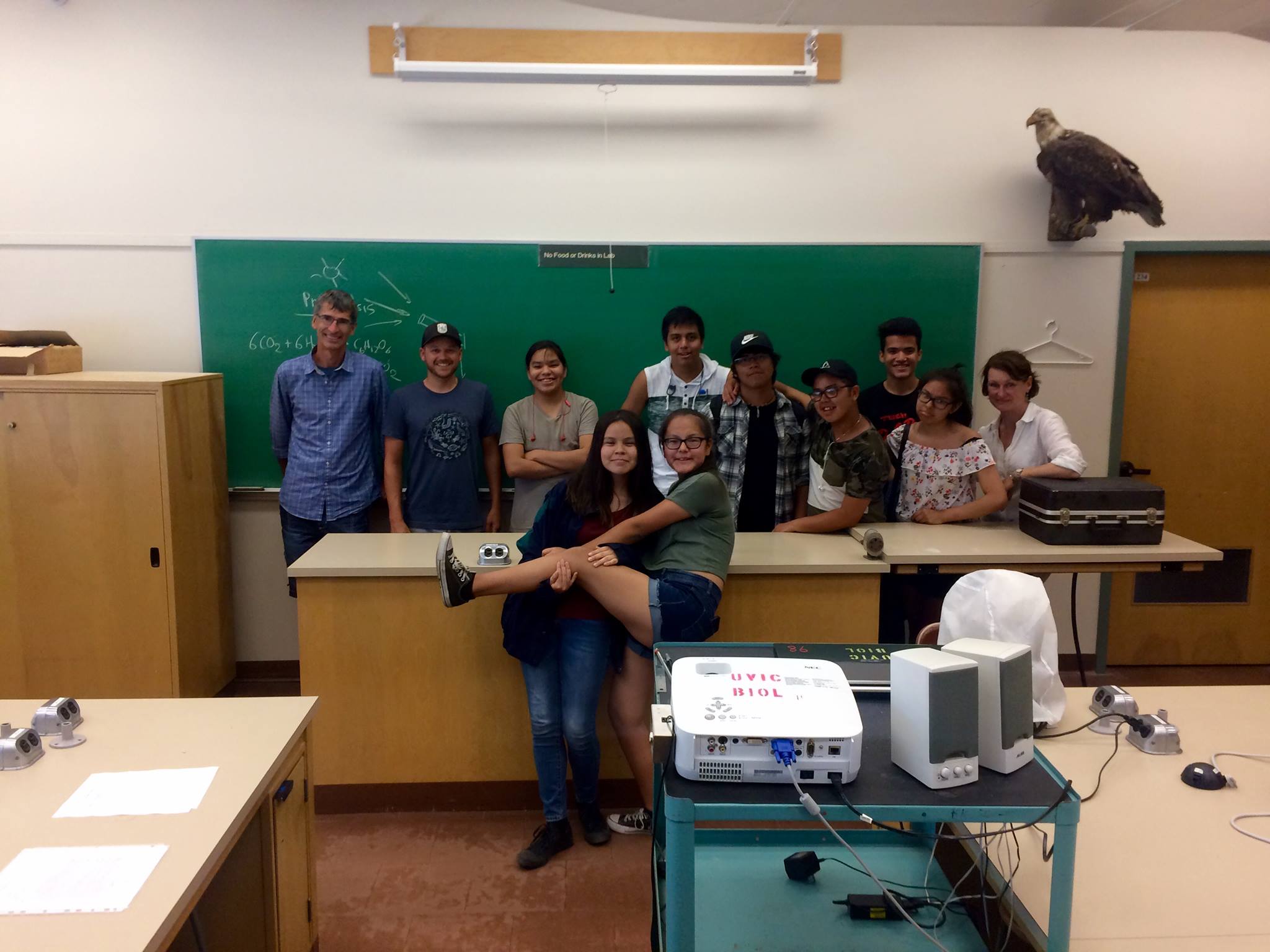
Songhees Youth and UVIC team in the biology lab.